
Ordered a Starlink, but it arrived with gaps in the casing: what should I do?

Imagine this: you open a box with a new Starlink, and its housing has noticeable gaps, uneven seams, and delamination at the corners. Your first thought is that you were sold a used or defective terminal. But in reality, this appearance of Starlink terminals is a very common story that buyers around the world face constantly. We ourselves regularly notice such features when unboxing new batches of terminals. However, is there really cause for concern, and will it affect the operation of your Starlink? Let's figure it out.
What do users on the internet say about this?
In particular, on the Reddit platform, we found a bunch of discussions where users share photos of their devices, which clearly show all the defects.
"Has anyone else noticed the liner peeling/delaminating on the Gen3 dish? It’s especially noticeable at the corners, and I’m worried about moisture getting inside. If it’s splash-resistant, I would expect the liner to sit flush against the gray trim ring, like on the Gen2. Is this normal? Is this a known issue? Should I be worried? It’s only been a week since unboxing," writes one user.
"I decided to try a different spot for my satellite dish, and while moving it, I noticed small gaps in the top corners. Could this become a problem?" shared another user.
"Hi everyone, a few days ago I ordered a standard Starlink v3 kit, and while trying to decide how to mount it, I discovered that every corner of the dish looks 'deformed.' I received the dish brand new directly from the official Starlink website, and I’m not sure if this is how it’s supposed to be, since this thing is supposed to be weather-protected outdoors. Any information would be greatly appreciated, thanks!" asks another contributor.
And looking at all the photos shared by terminal owners, a similar condition is observed in kits purchased directly from Starlink or from official stores.
Do these gaps affect the airtightness of Starlink?
The presence of external gaps causes users to worry about whether Starlink really meets the protection standard stated by the manufacturer. However, these gaps are purely a cosmetic feature of the outer plastic.
Ukrainian engineer Oleg Kutkov conducted a detailed technical analysis of the Starlink terminal design and dismantled the mechanism of their moisture protection.
According to him, the housing design has a special triple wedge and a high internal ridge. Such a design creates a physical barrier that completely prevents moisture from entering the terminal.
Therefore, the internal electronic components remain isolated. And the factory level of airtightness according to the IP standard is fully maintained for the entire service life of the device.
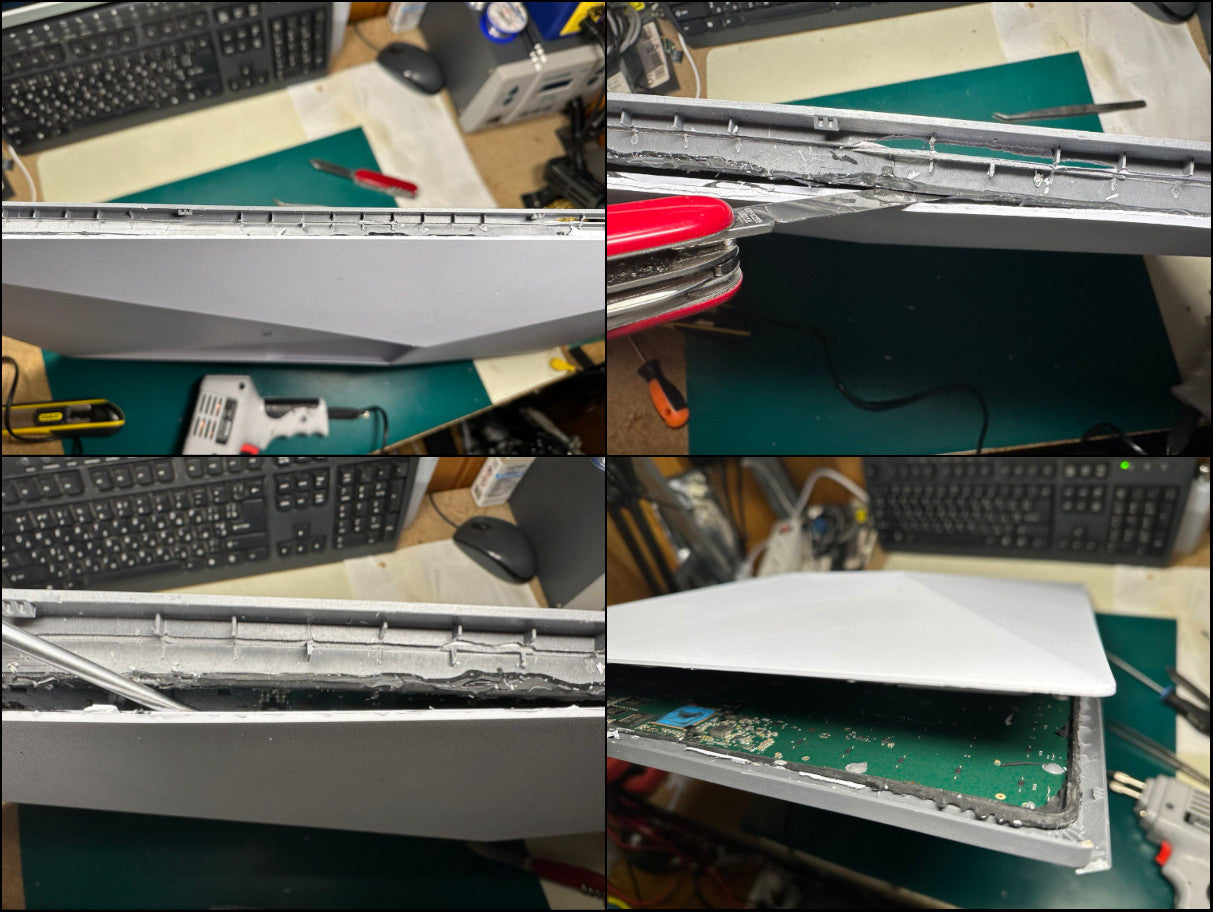 Source: Oleg Kutkov's personal blog
How does Starlink itself explain this?
It is worth understanding that Starlink produces thousands of satellite dishes every day. And to ensure such a production volume, the factories operate at maximum load. The process of assembling terminals involves applying a special sealant and compressing the parts of the dish in special presses. Due to the high speed of the conveyor, the dishes are removed from the presses before the chemical curing reaction of the sealing material is complete.
During the drying of the glue, chemical processes occur with heat release. It is this internal heat that causes physical expansion and slight deformation of the plastic panels. As a result, the sealant dries in the open air, creating characteristic corner gaps and noticeable openings at the joints.
In the same Reddit thread, it is noted that the Starlink company itself responded to a similar complaint about airtightness:
"Yes, small gaps on the surface of the Gen 3 housing are normal and do not affect the fit, form, or function of the product."
In addition, the official Starlink website states that all terminals are tested before shipment to verify that potential cosmetic flaws do not affect the functionality of the devices.
And if you wish to additionally protect your Starlink from extreme weather conditions, mechanical damage, or ensure its complete airtightness just in case — contact Adaptis! We will find a reliable solution for you.

